

Last Updated: 22/06/2026
Which Cat Flea and Worming Product Should You Choose?
Our vet compares the most popular cat parasite prevention products side by side - so you can pick the right one for your cat.
Author: Dr Belinda Stancombe BVSc (Hons)
Reading Time: 4 minutes - short read
Choosing a cat parasite preventative isn't as simple as grabbing whatever's on the shelf. Different products cover different parasites, work for different durations, and suit different lifestyles. This guide compares the major options side by side so you know exactly what you're getting.
For a full guide to which parasites your cat needs protection from, see our Flea, Tick and Worming Guide for Cats.
Have a dog? See our Which Flea, Tick and Worming Product Does Your Dog Need? guide instead.
What does each cat parasite product cover?

Nexgard Spectra
Nexgard Spectra covers fleas, paralysis, bush and brown dog ticks, heartworm, roundworm, hookworm, tapeworm, lungworm, ear mites and mange mites. Applied monthly.
Revolution Plus
Revolution Plus covers fleas, paralysis and bush ticks, heartworm, roundworm, hookworm, ear mites, mange mites and biting lice. Applied monthly. Does not cover tapeworm or lungworm.
Bravecto Plus
Bravecto Plus covers fleas, paralysis and bush ticks, heartworm, roundworm, hookworm, lungworm and ear mites. Applied every 2 months. Does not cover tapeworm.
Advocate / Neovet
Felpreva
Felpreva covers fleas, paralysis ticks, roundworm, hookworm, tapeworm, lungworm and ear mites. Applied every 3 months. Does not cover heartworm.
Revolution / Evicto / Neovela
Revolution, Evicto and Neovela covers fleas, heartworm, roundworm, hookworm, ear mites and biting lice. Applied monthly. Do not cover lungworm or tapeworm.
Advantage
Advantage covers for fleas only. Applied monthly.
Capstar
Capstar covers for fleas only. Given daily as required.
Drontal / Paragard
Profender
Profender covers for roundworm, hookworm, tapeworm and lungworm. Applied every 3 months. Does not cover fleas, ticks or heartworm.
Milbemax / Milpro
Seresto
Seresto covers for fleas and paralysis ticks for 8 months.
Note: No tick preventative is 100% effective, so we recommend daily tick searches, particularly if your cat spends time outdoors in high-risk tick areas.
Nexgard Spectra vs Revolution Plus for cats

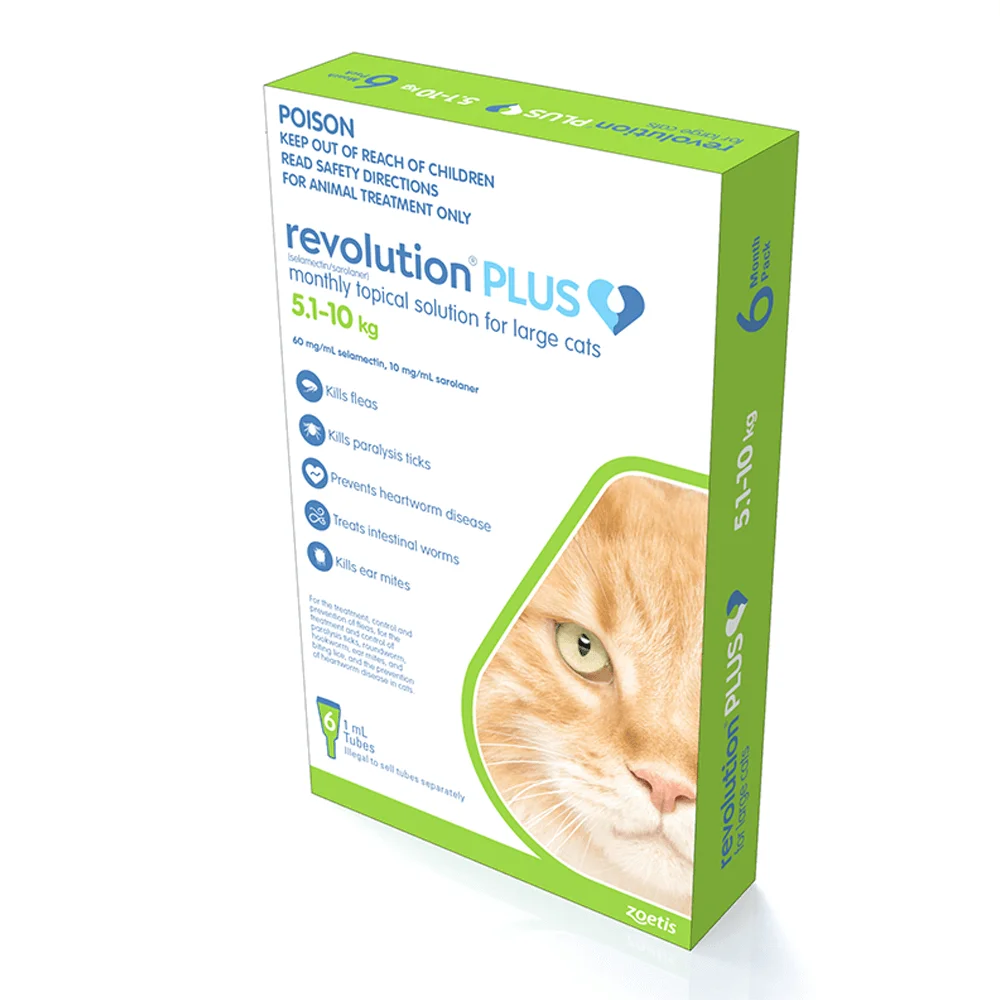
Both are monthly spot-on treatments covering fleas, paralysis and bush ticks, heartworm, roundworm, hookworm, ear mites, and mange mites. The key differences are:
Nexgard Spectra also covers tapeworm, lungworm, and brown dog ticks - three things Revolution Plus does not cover. Revolution Plus covers biting lice, which Nexgard Spectra does not.
For most Australian cat owners, the deciding factor is tapeworm. If your cat hunts prey or has had fleas (the main tapeworm transmission routes), Nexgard Spectra's tapeworm coverage makes it the more complete choice. If tapeworm isn't a concern and your cat doesn't encounter brown dog ticks, Revolution Plus offers similar core protection.
Bravecto Plus vs Revolution Plus for cats
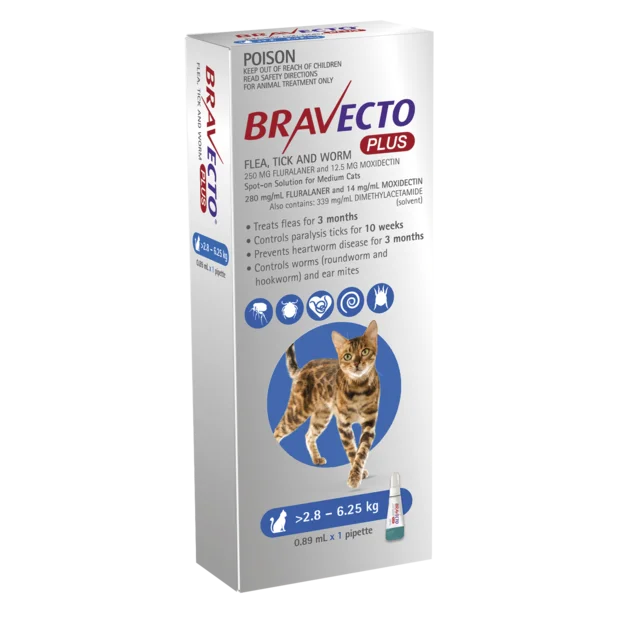
The main practical difference is dosing frequency. Revolution Plus is applied monthly; Bravecto Plus is applied every 2 months. Both cover fleas, paralysis and bush ticks, heartworm, roundworm, hookworm, and ear mites. Bravecto Plus also covers for lungworm. Neither covers tapeworm.
Bravecto Plus suits owners who find monthly applications hard to keep up with, and/or for lungworm coverage. If you're looking for a longer-lasting option with similar core coverage, it's a reasonable switch. However, if tapeworm coverage is important for your cat, neither product covers these - Nexgard Spectra would be a better fit.
Advocate vs Nexgard Spectra for cats
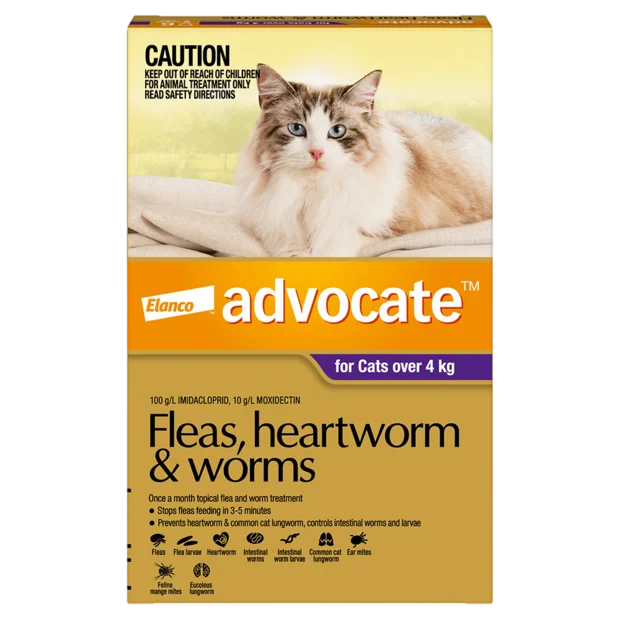
The key differences are tick and tapeworm coverage. Advocate (and its equivalent Neovet) does not cover ticks or tapeworm. Nexgard Spectra covers paralysis, bush, and brown dog ticks, plus tapeworm.
Advocate does cover lungworm - and so does Nexgard Spectra, so that's not a differentiator between the two.
For strictly indoor cats in low-risk tick areas, Advocate or Neovet provides solid core coverage at a typically lower price. For cats with any outdoor access, or cats that hunt, Nexgard Spectra's broader coverage is worth the difference.
Is Neovet the same as Advocate for cats?
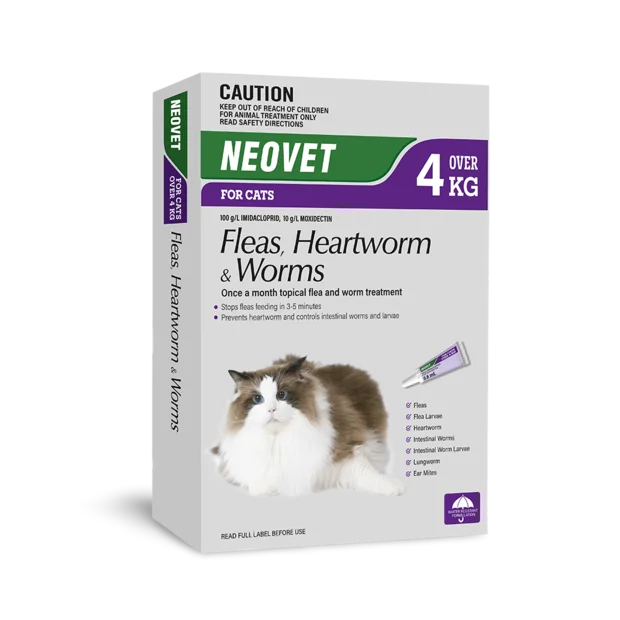
Yes, for practical purposes. Neovet contains the same active ingredients as Advocate - imidacloprid and moxidectin - and provides equivalent coverage: fleas, heartworm, roundworm, hookworm, ear mites, mange, and lungworm. Neither covers ticks or tapeworm.
The difference is brand and price. Neovet is typically more affordable. If you're using Advocate and want to reduce cost without changing your cat's parasite coverage, Neovet is a straightforward switch - though always worth confirming with your vet first.
Bravecto vs Bravecto Plus for cats
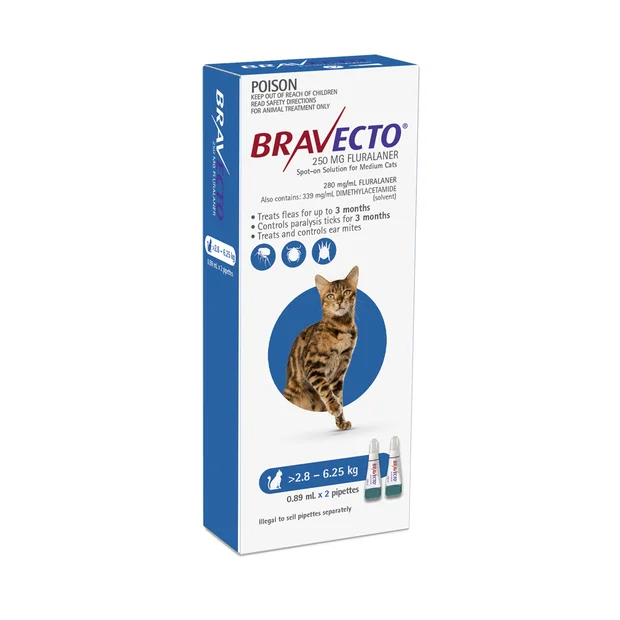
Bravecto (without "Plus") treats fleas, ticks and ear mites only. Bravecto Plus adds moxidectin, extending coverage to heartworm, roundworm, hookworm and lungworm. Neither version covers tapeworm.
Bravecto is applied every 3 months whereas Bravecto Plus is applied every 2 months.
For most cats, Bravecto Plus is the more complete option since it covers intestinal worms in a single product. Standard Bravecto would need a separate worming treatment (including heartworm) added, such as Milbemax or Milpro every month, making Bravecto Plus simpler to manage.
Revolution vs Revolution Plus for cats
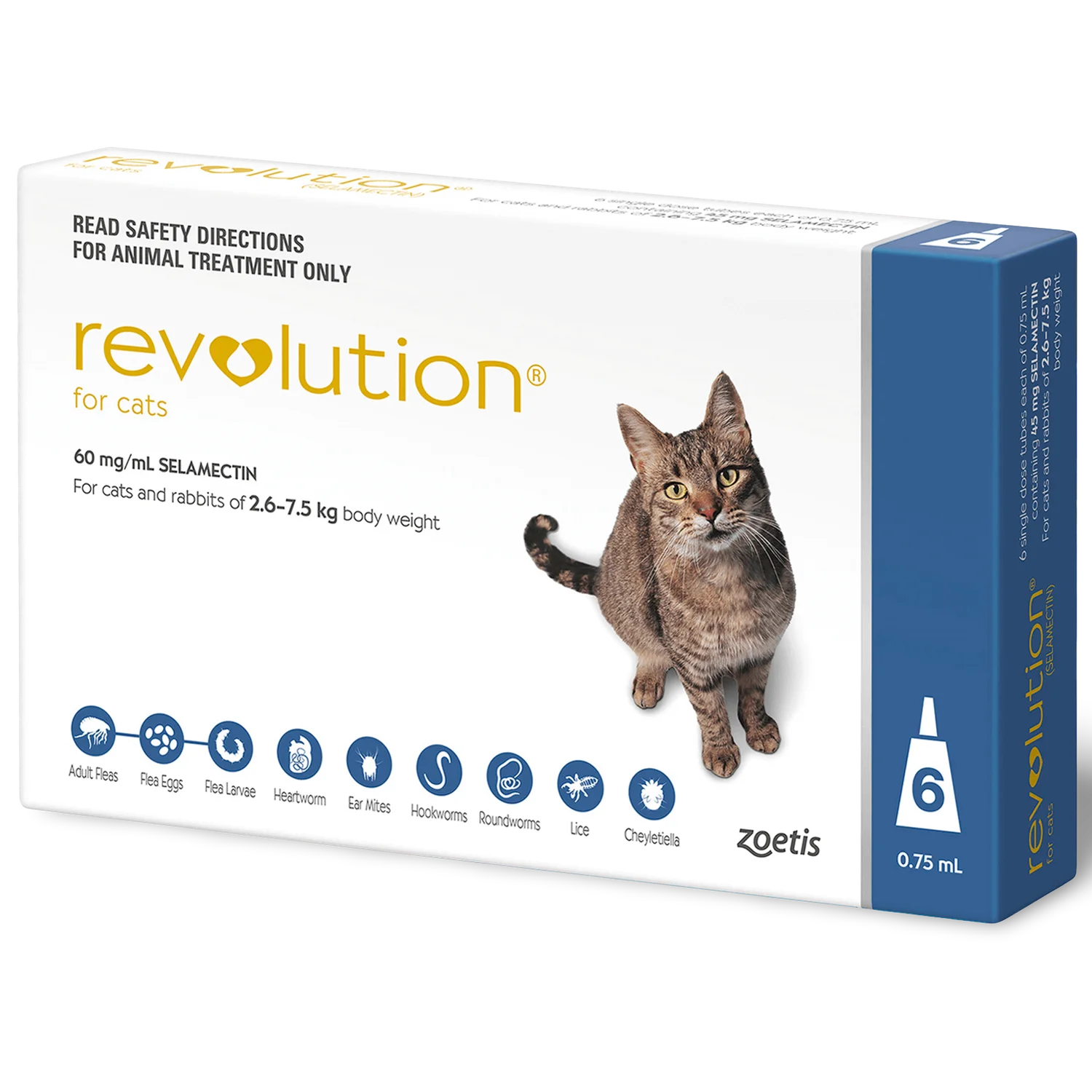
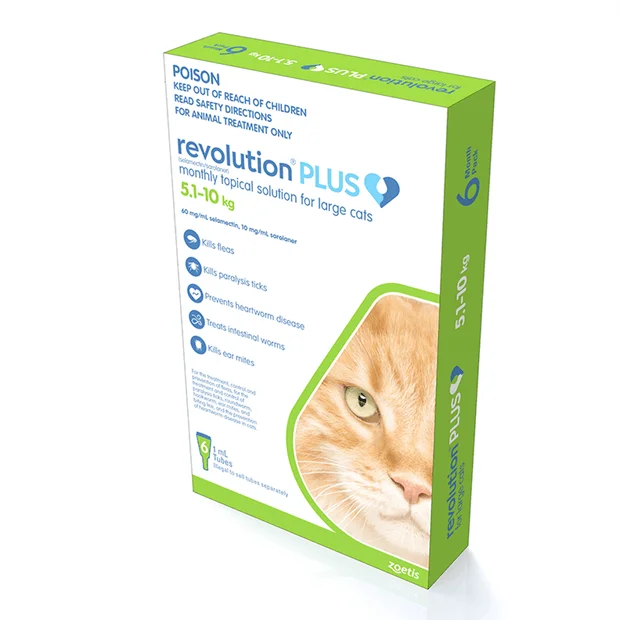
The difference comes down to one active ingredient: sarolaner. Original Revolution contains selamectin only, covering fleas, heartworm, roundworm, hookworm, ear mites and biting lice - but no ticks. Revolution Plus adds sarolaner to the formula, which adds paralysis and bush tick coverage, plus mange mites.
If your cat is strictly indoors and tick exposure isn't a concern, original Revolution covers the core parasites. For cats with any outdoor access in tick-prone areas, Revolution Plus is the safer choice. The price difference between the two is usually modest, so most vets now recommend Revolution Plus as the default over original Revolution.
Advantage vs Advocate for cats
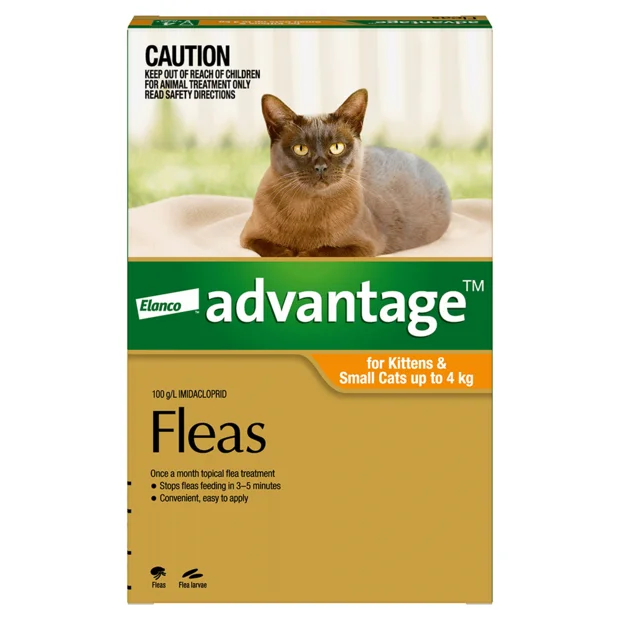
Advantage contains imidacloprid only and treats fleas - that's it. No worms, no heartworm, no ticks. Advocate contains the same imidacloprid plus moxidectin, which extends coverage to heartworm, roundworm, hookworm, ear mites, mange, and lungworm.
For most cats, Advocate is the significantly more complete product. Advantage alone would need to be paired with a separate intestinal wormer and heartworm prevention to provide adequate parasite coverage - at which point Advocate is simpler and usually more cost-effective as a single product.
Advantage can be a reasonable choice if your cat only needs flea control and all other parasite prevention is being managed separately, but this would be an unusual situation. If you're currently using Advantage and want broader coverage without switching to a different brand, Advocate is the direct upgrade.
Which cat parasite products cover tapeworm?
Two comprehensive products cover tapeworm as part of their formula:
Nexgard Spectra - monthly, also covers ticks, heartworm, and lungworm.
Felpreva - 3-monthly, also covers ticks and lungworm, but does not cover heartworm. We recommend checking with your vet before using Felpreva as your sole preventative.
If you're already using a product that doesn't cover tapeworm, a standalone tapeworm treatment such as Milbemax, Drontal, or Profender can be added alongside it. Tapeworm is most commonly transmitted via fleas and prey animals, so cats that hunt or have had a flea infestation are at highest risk.
Read more in Tapeworms in Cats.
FAQs
Articles recommended for you
Our vet authored guide to the benefits of feeding your dog fresh food plus tips and advice for introducing it into their regular menu.
Thinking of getting a fish? Check out our guide for setting up a tank and home care tips!
Looking to understand horse feeds better? This comprehensive guide covers feeding recommendations for horses of all ages and disciplines.
Does your pet suffer from anxiety? Check out our Vet-guide for treatment options to help your pet.
History
Our experts continually monitor the health and wellness space and we update our articles when new information becomes available.
Thu 11 Jun 2026
Edited by Dr Gillian Hill BVSc (Hons)Dr Belinda Stancombe BVSc (Hons)
Veterinarian
Dr Belinda graduated from The University of Queensland in 2009 and has worked as a Small Animal Veterinarian for over 10 years in South East Queensland. She also has experience as a telehealh consultant, providing veterinary advice for online customers.She has a special interest in animal behaviour, preventative health, the human-animal bond and internal medicine. Outside of work hours she is closely affiliated with a kitten rescue and is also a devoted carer of orphaned rescue kittens.


