

Last Updated: 28/04/2026
10 Fun Facts About Rabbits
Think rabbits are simple starter pets? Think again! Explore 10 fascinating facts about rabbit care, behaviour, and health. Learn how to provide the best life for your long-eared companion with our expert vet advice.
Author: Dr Nicole Wynne BSc BVMS MANZCVS (Unusual Pets)
Reading Time: 2 minutes - short read
Rabbits are often unfairly labelled as low-maintenance starter pets, but anyone who has shared their home with one knows the reality: these are complex, intelligent, and highly rewarding companions. Far from being simple hutch-dwellers, rabbits have distinct personalities and specific needs that, when met, reveal the true joy of rabbit ownership. Whether you are a long-time bunny parent or considering welcoming one into your home, understanding these unique animals is the first step toward a happy, healthy relationship.
In this article
- Rabbits are not rodents
- They are not a "starter pet"
- Rabbits are intelligent and interactive
- They are clean and easy to litter train
- Rabbits need companions
- Specialised veterinary care is essential
- Their teeth grow for life
- Hay is their primary diet
- They have a long lifespan
- Environmental enrichment is a must
Rabbits are not rodents

Rabbits belong to their very own order - the Lagomorphs. Lagomorphs consist of over 100 species including rabbits, hares, and pikas. There are several characteristics that distinguish Lagomorphs from rodents:
- Four incisors in the upper jaw as opposed to two in rodents
- Furred feet instead of footpads
- Completely herbivorous diet (some rodents are omnivorous)
There are also many species of rabbit, with our domestic pet rabbits belonging to the species Oryctolagus cuniculus. The American cottontail rabbit belongs to the genus Silvilagus. There are even endangered species of rabbit, such as the Volcano rabbit (Romerolagus diazi)!
Learn more in our Rabbit Care Guide.
They are not a "starter pet"

Rabbits require a lot of care, and many pet owners feel that they can be more difficult to care for than dogs or cats in some ways. Sadly, this misunderstanding has led to serious welfare issues in many pet rabbits.
Most rabbits do not like being picked up and cuddled, and as they are prey animals, they have a strong flight response. Because of these characteristics, rabbits are not good pets for young children.
They also require a complex diet consisting of fresh hay, a variety of leafy greens, and a small amount of high quality pellets, and a single product will not fulfil their needs like a dog or cat.
Furthermore, rabbits should be kept indoors in Australia due to the hot summers we experience, infectious diseases such as Calicivirus as well as the rise of urban predators like foxes.
Finally, rabbits tend to hide symptoms of illness, and tend to become timid and withdrawn in less than ideal surroundings, leading to the impression that they are unsociable and unintelligent, which couldn't be further from the truth!
Learn more in our explainer all about Common Rabbit Behaviours.
Rabbits are intelligent and interactive

Because rabbits are prey animals, they will not show their full range of behaviour and personality when they feel threatened, and it can take rabbits several months to fully relax in their environment. Once they relax and feel safe, they are funny, demanding, audacious, and inquisitive pets!
Having rabbits as free-roam indoor pets also allows them to demonstrate their full range of behaviour, and they can also properly integrate into the family when kept indoors.
Rabbits benefit from food puzzle toys like snuffle mats and interactive feeder balls, a variety of fresh leafy greens, and they love to chew and tear apart items like cardboard boxes. They are also very routine-oriented, and have a very strong opinion about mealtimes, especially if they’re late! They can also be trained to perform tricks, and will often train themselves to respond to common household noises like packets crinkling and fridges opening!
They are clean and easy to litter train
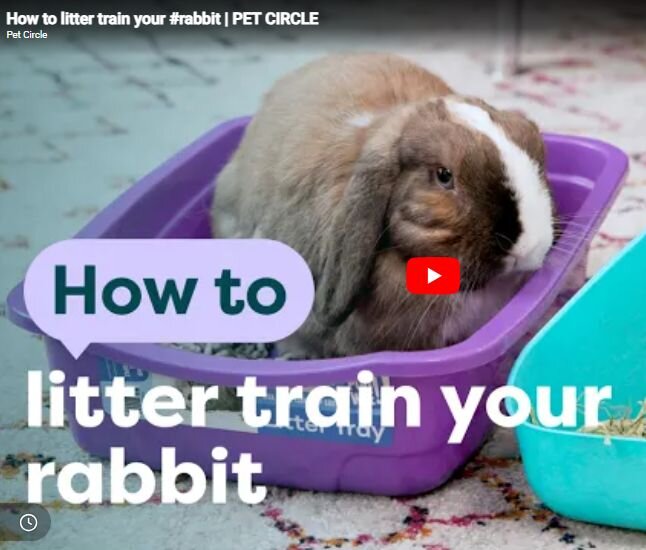
Rabbits are extremely clean and will groom themselves thoroughly on a regular basis. This means they generally don't require any bathing. In fact bathing can be very dangerous for rabbits and should be avoided. Don't worry they do a perfectly fine job themselves!
They also prefer to toilet in the same place, usually in corners, and so they are very easy to litter train! Litter training rabbits often just involves putting litter boxes in the corners of a room nearby where they eat their hay.
Rabbits clean themselves so much that they can put themselves at risk for developing gut problems due to ingested hair so regular brushing is important, especially for long-haired breeds such as Angoras. They will also groom each other as a social behaviour. This called allo-grooming.
Learn more in our Rabbit Toilet Training Guide.
Rabbits need companions

Rabbits are social animals, and their natural behaviours include lots of social activities like allo-grooming, snuggling, and playing. However, they make it difficult for rabbit owners as not all rabbits will get along and trying to get rabbits to become friends can sometimes be a tedious process.
Rabbits need to go through a process called “bonding” to become friends. This is because rabbits are very territorial, and will see a new rabbit as an intruder to their home at first, and they need to be introduced in a neutral environment prior to moving in together. This makes sense as you wouldn’t want some stranger just showing up at your door with a suitcase!
Sadly, this is misinterpreted by some owners as their rabbit not wanting a friend but with careful planning and some persistence many rabbits will eventually bond but it can take a few months. Many rabbit rescues will allow bonding on site, and they will also have an initial grace period in case it doesn’t work out.
For more information, read through our Rabbit Training Guide.
Specialised veterinary care is essential

Although they are a common pet, they are considered an exotic species as their needs, anatomy, and physiology are so different from cats and dogs.
Some general practice veterinary clinics will have vets on staff that are comfortable seeing rabbits for routine procedures and checkups, but they may still need to refer to a more specialised vet for other procedures.
This can be challenging for rabbit owners that live in rural areas. This also means that veterinary care for rabbits can cost the same or more than a dog or a cat. This makes sense when you think about it, as these little animals have complex body systems that are more difficult to deal with due to their size and fragility.
Learn more about why regular veterinary care is essential to prevent Gut Stasis in Rabbits.
Their teeth grow for life
While rabbits do have baby teeth, these are lost before they are born and their adult teeth grow constantly. This is an adaptation to a diet rich in fibrous, coarse vegetation like grass. This fibrous diet keeps their teeth worn down. If this didn’t happen, they would lose the ability to eat very quickly due to wear and tear. Because of this adaptation, a proper diet is very important for rabbits, as if their teeth aren’t worn down appropriately, dental disease can develop where their teeth become overgrown and grow sharp points called spurs, causing pain and soft tissue damage. Dental disease can even cause jaw fractures, bony infection, and sadly can never be cured. This is very different to dogs and cats where they have a single set of adult teeth.
Learn more about Dental Disease in Rabbits.
Hay is their primary diet

Hay and grass have a special inclusion that makes them uniquely suited for wearing down teeth. These plants contain silicates within their leaves to allow them to stand upright - silicates are basically glass! Other vegetables aren’t hard enough to wear teeth down appropriately, and even wood isn’t good enough for the job! It’s like how only diamonds can be used to cut diamonds.
Hay should be 80-90% of a rabbit’s diet, and just like us, they are less inclined to eat foods that are good for them! That means that rabbits will eat other food like treats or pellets preferentially over hay. This is because high calorie foods like those are few and far between for wild rabbits, and so they feel like they have to eat as much of that as they can while it is available. Because of this behaviour, hay should be offered ad lib, but all other foods limited to encourage hay consumption.
Explore tips on How to Get Your Rabbit to Eat More Hay.
They have a long lifespan

Rabbits can live longer than some breeds of dog! As we learn more about their needs and develop veterinary care to suit rabbits, we are continuing to extend their lifespans long past their natural lifespan in the wild. As rabbits are prey animals, they may live only 1-2 years in the wild due to natural pressures.
Management of rabbit illnesses are also continuing to improve, and exotic veterinarians are constantly finding new ways to manage disease. Choosing to have a pet rabbit is a long term commitment, and they will require the same level of care when they are older as a dog or a cat.
An optimal diet will support your rabbit's health into their senior years. For more information, read through our Guide to What to Feed Rabbits, Rats and Guinea Pigs.
Environmental enrichment is a must

Rabbits are complex animals, and so they need enrichment in their lives just like dogs and cats. Many rabbits are very food motivated, and high value food like pellets and treats can be fed in food puzzle toys.
Many food puzzle toys designed for cats will work well for rabbits, but keep in mind that they do not use their front legs to bat or paw like cats do.
They are also natural tunnellers, and so cat tunnels are a great enrichment item for them. They also love to chew and destroy things, and cardboard boxes or cardboard cat scratchers are great options for rabbit toys.
Learn more about the Best Toys for Small Pets.
Rabbit FAQs
Bringing a rabbit into your life is a significant, long-term commitment that rewards owners with years of quirky behaviour and affection. By prioritising their need for high-quality hay, safe socialisation, and constant mental stimulation, you will ensure your bunny thrives. Remember, they are not just pets; they are family members with big personalities and even bigger hearts.
Articles recommended for you
Our vet authored guide to the benefits of feeding your dog fresh food plus tips and advice for introducing it into their regular menu.
Thinking of getting a fish? Check out our guide for setting up a tank and home care tips!
Looking to understand horse feeds better? This comprehensive guide covers feeding recommendations for horses of all ages and disciplines.
Does your pet suffer from anxiety? Check out our Vet-guide for treatment options to help your pet.
History
Our experts continually monitor the health and wellness space and we update our articles when new information becomes available.
Tue 28 Apr 2026
Edited by Dr Gillian Hill BVSc (Hons)Dr Nicole Wynne BSc BVMS MANZCVS (Unusual Pets)
Veterinarian, MANZCVS (Unusual Pets)
Dr. Nicole graduated from Murdoch University in WA in 2014, and immediately started working in exotics-only practice. She was also one of the few vets in Australia that would routinely see venomous snakes ranging from death adders to tiger snakes. Although Dr. Nicole enjoys seeing all exotic pets, her absolute favourite are rabbits. She passed her Australian and New Zealand College of Veterinary Scientists Membership (MANZCVS) exam in unusual and exotic pets in 2021.


